
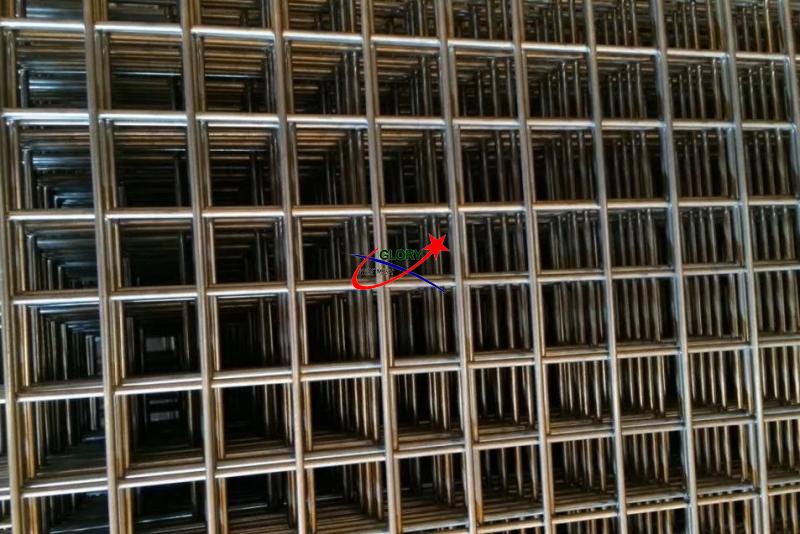
Stainless‑Steel Welded Mesh or Woven Wire Mesh Panels for Ultrasonic Cleaning Mesh Baskets
Stainless‑Steel Welded Mesh or Woven Wire Mesh Panels for Ultrasonic Cleaning Mesh Baskets
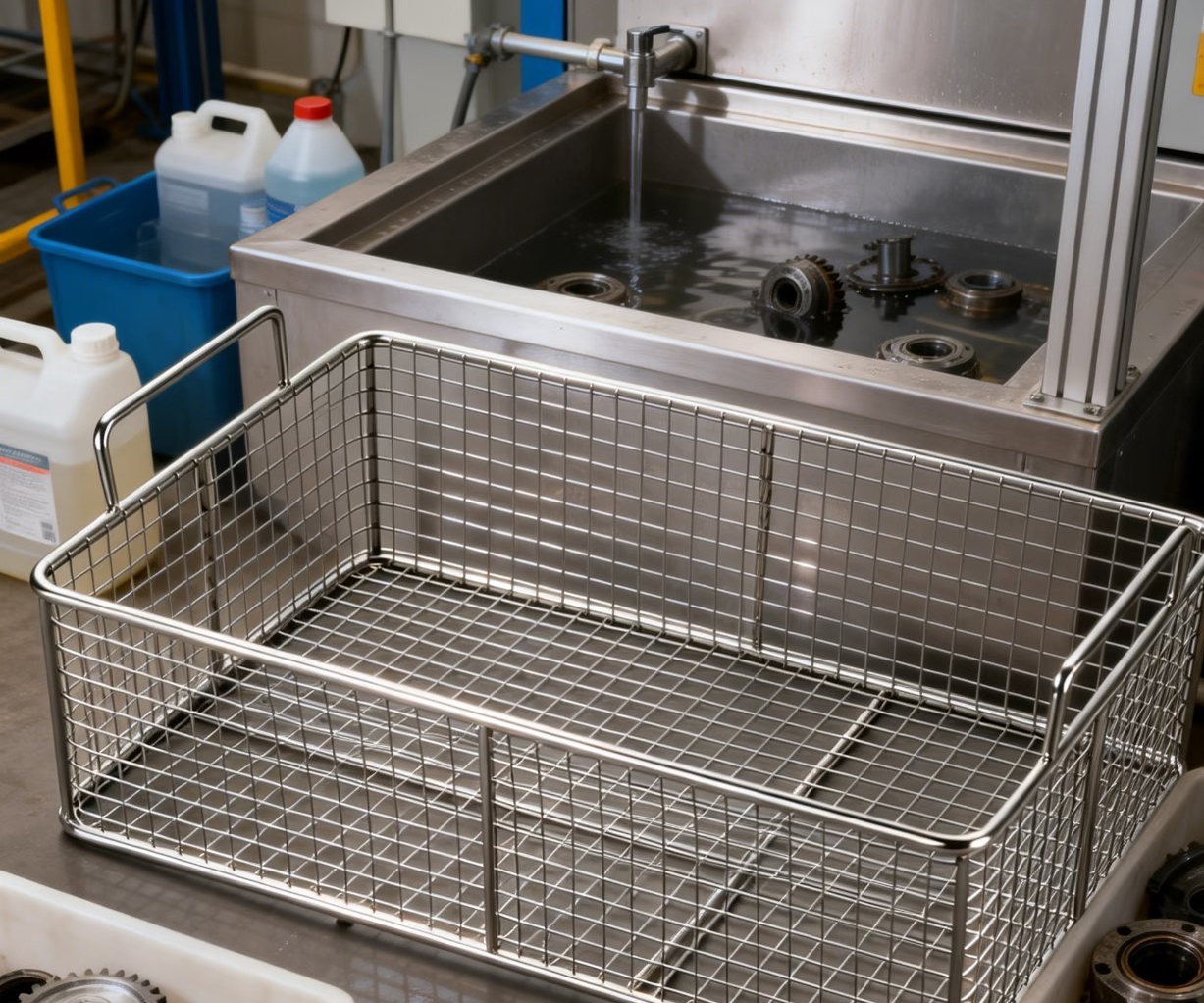
When selecting mesh baskets for ultrasonic cleaning machines, picking the right stainless‑steel mesh panel can greatly boost cleaning performance.Far more than just a “basket”.
it is a critical accessory that guarantees cleaning efficiency and workpiece safety.
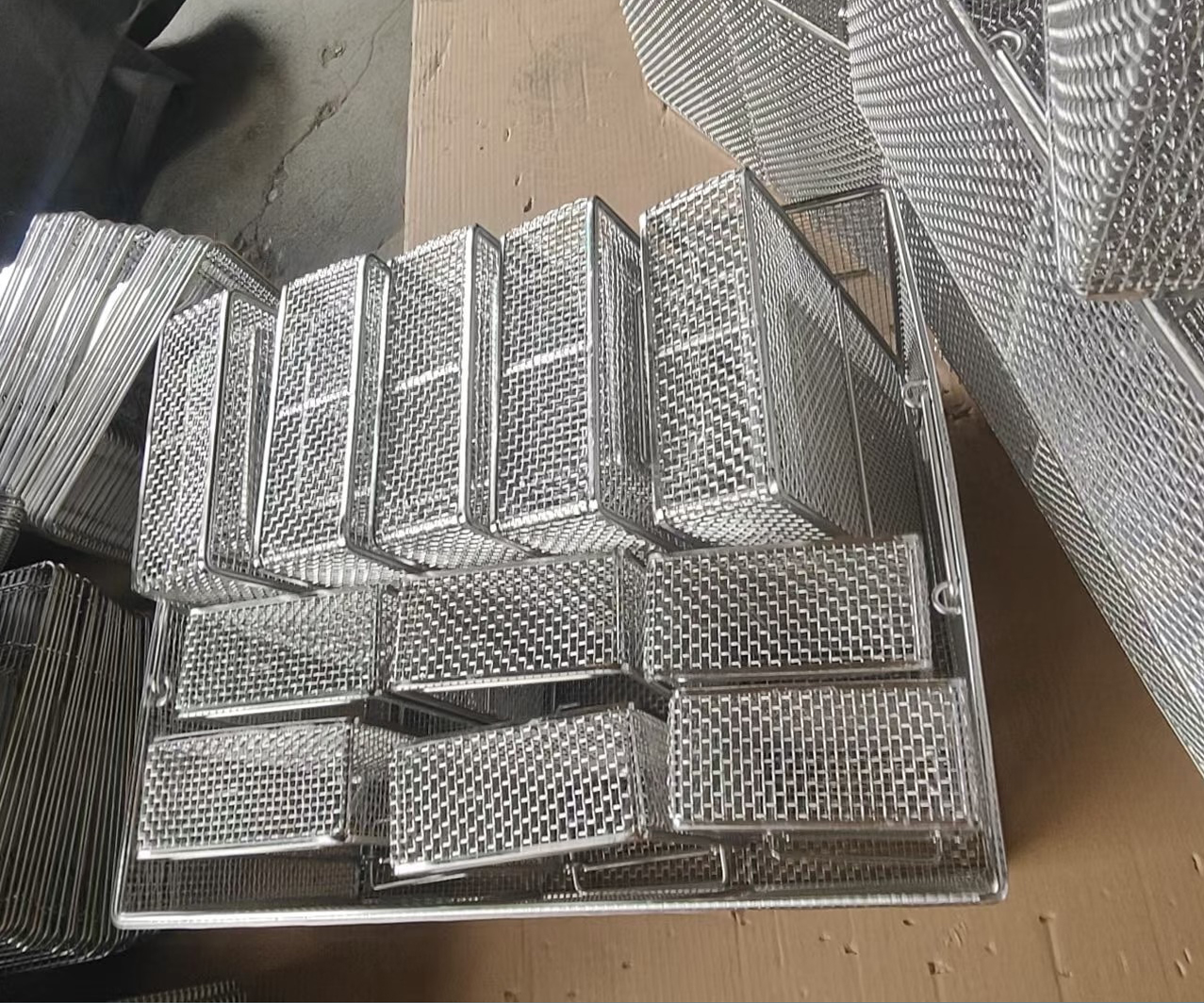
Material is fundamental: got for 304 / 316 /316L stainless steel Woven Wire Mesh 4mesh .6mesh.8mesh or Welded wire mesh 1/2",1/4",1" of opening
Material is the primary consideration for ultrasonic‑cleaning mesh baskets.
• 304 or 316 stainless steel is preferred: These grades feature good acid‑alkali resistance and high‑temperature resistance. They can withstand long‑term immersion in cleaning
solutions without rusting. In particular, 316 (or 316L) delivers superior corrosion resistance, ideal for demanding industrial or medical‑grade applications.
• Avoid 201 stainless steel: Some manufacturers substitute low‑cost 201 stainless steel for 304. Though visually similar, 201 tends to rust under high‑ frequency ultrasonic vibration
and corrosive liquids. This causes secondary contamination of workpieces and may even damage cleaning equipment.
• Sintered mesh as an advanced option: For higher strength and filtration accuracy, consider 316L stainless‑steel powder‑sintered plates. Manufacturedvia special processes,
they offer high mechanical strength. Well‑suited for ultrasonic back‑flow cleaning, they are reusable with a long service life.
 |  |  |
Mesh size determines cleaning precision
Bigger mesh openings are not always better. Mesh size must match your workpieces precisely.
• Tiny parts (e.g. electronic components): Use dense 6mesh or 8 mesh to prevent small parts from falling through or getting jammed.
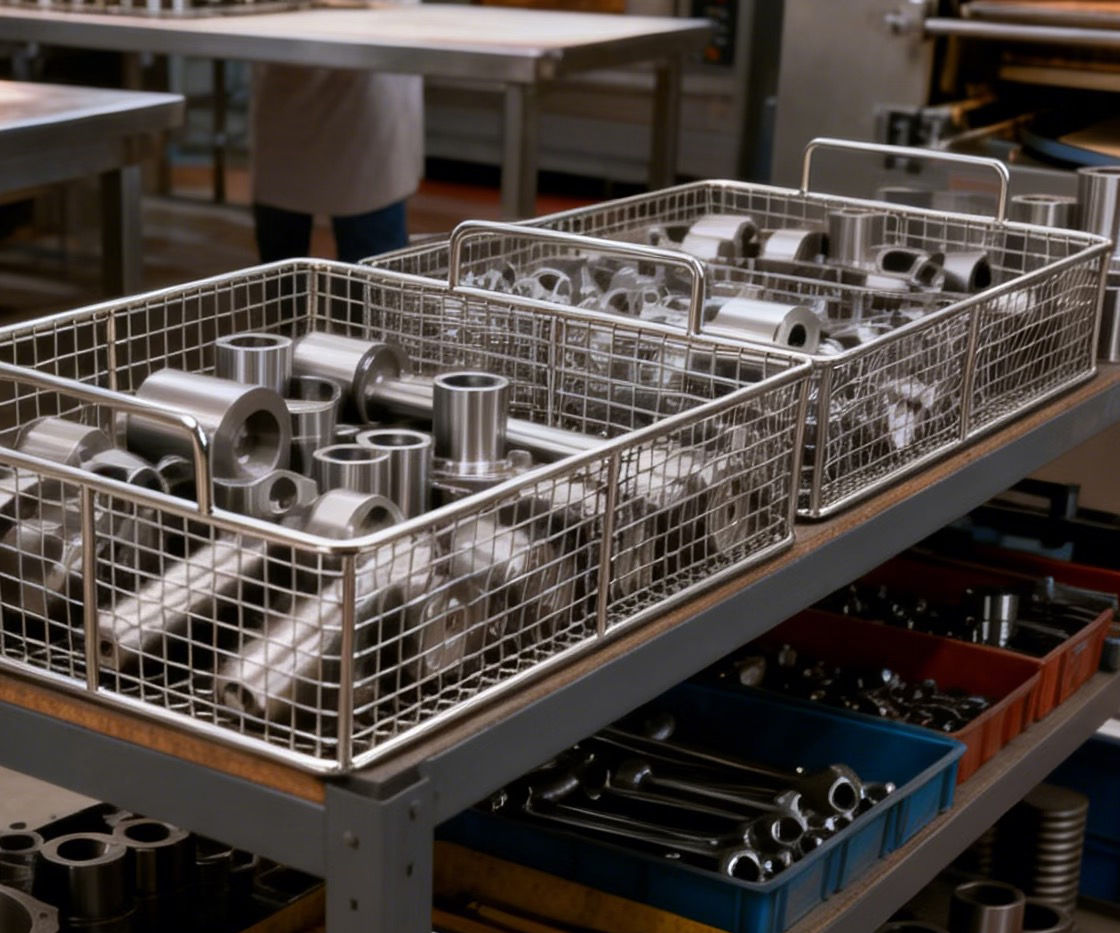
• Medium hardware (e.g. screws, bearings): Standard 2mesh 4 mesh works best. It enables full penetration of cleaning fluid and ultrasonic waves for high cleaning efficiency.
• Large housings & components: 5‑8 mm heavy‑duty wire mesh provides higher load‑bearing capacity and better deformation resistance.
• Precision perforated mesh: For medical devices and other high‑precision requirements, mesh baskets with punching tolerance up to ±0.02 mm effectively reduce cleaning dead
zones and minimize residue.
Dimensions & structure affect cleaning results
The dimension and structural design of the mesh basket directly influence ultrasonic penetration and cleaning uniformity.
• Proper sizing: The basket height should be 70%‑80% of the cleaning‑tank depth. This prevents workpiece stacking and allows full‑coverage ultrasonic penetration.
• Structural design: Quality baskets incorporate flow‑guiding structures to avoid thick frames that block cavitation effects. Some precision baskets adopt an ultra‑thin design of
0.5‑1.5 mm, allowing smoother flow of liquid and ultrasonic energy — especially effective for parts with blind holes and narrow gaps.
• Processing details: Choose baskets with smooth burr‑free surfaces and firm welds to prevent workpiece scratches and ensure long service life.
 Send Email
 GPY3016
 Gary
Gary